You bought what you thought would be a soft, cloud-like mattress. After a few nights, it feels more like quicksand. Your hips sink too far, your lower back feels stiff, and rolling over takes more effort than it should. That is usually the first sign that your mattress is too soft.
The good news is that you may not need to replace the whole bed right away. If the mattress is still structurally sound, the right mattress topper can add a more stable comfort layer and help reduce the sinking feeling. The key is choosing support, not extra fluff.
Viscosoft's insight
When a mattress feels too soft, the problem is usually not that you need more cushioning. It is that your body is sinking too far into the surface. A topper can help when it adds density and stability, but a plush pillowtop or loose fiberfill layer can make the problem worse.
Signs your mattress is too soft
A soft mattress is not automatically a bad mattress. Some sleepers prefer a deeper, cushioned feel. The problem starts when the mattress no longer keeps your body comfortably aligned.
Common signs of a mattress that is too soft include:
- Lower back pain: If your hips sink lower than your shoulders, your spine can curve into a hammock-like position.
- Difficulty rolling over: If you feel stuck in the mattress, the surface may be absorbing too much of your body weight.
- Sore hips or shoulders: A soft bed can still create pressure if your body sinks unevenly.
- Numbness or tingling: Poor alignment can create uncomfortable pressure around nerves and joints.
- A visible dip in the sleep area: If the mattress has a permanent sag, the support system may be worn out.
The quick test: is the mattress too soft or worn out?
Before buying anything, check whether the mattress is simply too plush for your body or whether it has actually failed.
The elbow test: Press your elbow into the center of the mattress and lean some body weight into it. If the surface sinks deeply, feels unstable, or takes a long time to recover, the mattress may not be giving you enough surface support.
Next, look at the bed without sheets. If there is a deep permanent body impression, sagging in the middle, or a slope that pulls you toward one side, a topper may only provide temporary comfort. If the mattress still looks even but feels too soft when you lie down, a supportive topper is more likely to help.
Viscosoft's insight
A topper works best when the mattress underneath still has a stable base. It can change the surface feel, but it cannot rebuild broken coils, repair a collapsed foam core, or fully erase a deep sag.
Can you make a soft mattress firmer?
You cannot change the internal foam, coils, or support core of your current mattress. What you can do is add a firmer, denser layer on top to create a more stable sleep surface.
If you are trying to make a soft mattress firmer, avoid toppers that are mainly designed to feel plush. Down-alternative toppers, ultra-soft pillowtops, and low-density foam can add height, but they may also let your hips sink even farther.
For this specific problem, look for:
- Higher-density foam: Denser foam is better at resisting sink-through and creating a more stable feel.
- Enough thickness to matter: A very thin topper may not separate your body from the soft mattress underneath.
- A secure cover or anchor system: If the topper shifts, bunches, or slides, it will not feel as supportive.
- A realistic goal: The topper should improve surface support, not turn a badly sagging mattress into a new bed.
For more detail on topper materials and firmness levels, read our guide to firm mattress toppers or compare different types of mattress toppers.
Best mattress toppers for a soft mattress
The best mattress topper for a soft mattress is usually one that adds stability, not extra plushness. These are the most relevant ViscoSoft options to compare if your bed feels too soft or lacks surface support.
Select High Density mattress topper
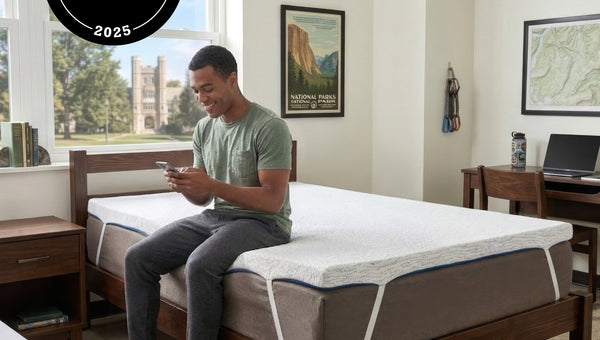
If support is the priority, start with the Select High Density mattress topper. It is designed to add a more stable memory foam layer to an existing mattress, which makes it a better fit for sleepers who feel like they are sinking too far into their bed.
This is the strongest match if your mattress still has a solid base but the top comfort layer feels too soft, too flat, or no longer supportive enough around the hips and lower back.

Viscosoft's insight
For a mattress that is already too soft, density matters more than a plush feel. A firmer, higher-density topper can create a more supportive surface, while an extra-soft topper may only add more sink.
Active Cooling Copper topper
A soft mattress can also sleep warmer because your body settles deeper into the surface. If your mattress feels too soft and you also wake up hot, compare the Active Cooling Copper topper.
This option is worth considering when you want a more supportive memory foam feel with cooling-focused materials. It is especially relevant for sleepers who like the contouring comfort of memory foam but do not want to feel trapped in a warm, overly soft bed.

What not to do if your mattress is too soft
When a bed feels uncomfortable, it is tempting to add the thickest or softest topper you can find. That can backfire. If the mattress is already letting your body sink too far, more plush cushioning may increase the same problem.
Avoid these common mistakes:
- Do not add a fluffy topper just for height. More height does not always mean more support.
- Do not stack multiple soft toppers. Layers can slide, compress unevenly, and make the bed feel less stable.
- Do not ignore the foundation. A weak frame, bowed slats, or unsupportive box spring can make even a good mattress feel too soft.
- Do not expect a topper to fix deep sagging. If the mattress has a permanent dip, the topper may eventually follow that shape.
If you are not sure whether your discomfort comes from a soft or firm sleep surface, read our guide on which mattress topper to choose for back pain.
When to replace the mattress instead
A topper is a practical first step when your mattress is still even, stable, and supportive underneath. It is not always the right fix for an old or damaged mattress.
You may need to replace the mattress if:
- there is a deep permanent sag where you sleep
- the middle of the mattress collapses inward
- you roll toward one side or toward the center of the bed
- the mattress feels uneven from left to right
- you sleep better on a different bed, sofa, or hotel mattress
If the main issue is surface comfort, a topper can be a cost-effective upgrade. If the support system has failed, replacement is usually the better long-term choice.
Viscosoft's insight
Use a topper when the mattress needs a better surface feel. Replace the mattress when the support underneath has failed. That difference matters because a topper should improve comfort, not cover up a broken sleep foundation.
How to keep the new support layer working
Once you add a supportive topper, make sure the rest of the sleep setup helps it perform well. Use a stable bed base, keep the topper properly positioned, and follow the product care instructions.
A mattress protector can also help keep the surface cleaner and easier to maintain. This is especially useful if you are trying to extend the life of your current mattress and topper combination.
For care tips, read our guide on how to care for your mattress topper. For cleaning the mattress itself, see our guide to cleaning a memory foam mattress.
Which product should you choose?
Start with the problem you want to solve.
- If your mattress feels too soft or lacks surface support, compare the Select High Density mattress topper.
- If your mattress feels too soft and you sleep warm, compare the Active Cooling Copper topper.
- If your mattress is too firm instead, a plusher option may make more sense. Read our best mattress toppers guide to compare different comfort goals.
- If you are not sure which direction to go, use the Find Your Topper quiz.
Viscosoft's insight
The right topper depends on why your bed feels wrong. For a soft mattress, choose stability first. For a hard mattress, choose cushioning first. For a hot mattress, look at cooling materials and airflow.
Final takeaway
If your mattress is too soft, you do not always need to replace it immediately. A supportive, higher-density topper can help create a firmer and more stable surface, especially when the mattress underneath is still structurally sound.
That said, a topper cannot fix a mattress with deep sagging, broken support, or a collapsed center. Check the condition of the bed first, then choose the product based on the real problem: too much sink, too much heat, poor alignment, or worn-out support.
To compare your options, explore ViscoSoft mattress toppers, read the best mattress toppers guide, or take the Find Your Topper quiz.