If you sleep on your back and wake up with a stiff lower back, the mattress is one of the first things to check. Most back sleepers do best on a medium-firm mattress that keeps the hips from sinking, so the lower spine stays in a neutral line. A hybrid, with pocketed coils under a foam comfort layer, is a strong option because the coils hold up the heaviest part of your body while the foam fills the curve of your lower back.
This guide explains why back sleepers feel a bad mattress in the lower back, what firmness to choose, and how a hybrid compares to all-foam. It also covers the cause most shoppers miss: a worn-out comfort layer on a base that is still fine.
Summary
- Back sleepers need a mattress that holds the hips level and fills the curve of the lower back. Too soft and the hips sag; too firm and the lower back is left unsupported.
- Medium-firm is the best starting point for most back sleepers, and a hybrid adds responsive coil support and easier movement.
- When a mattress starts hurting after a few years, the top comfort layer usually wears out first. On a modular mattress, you can replace just that layer.
Why back sleepers feel it in the lower back
Lying on your back, most of your weight sits in your hips and pelvis. A mattress has two jobs here: hold that heavy zone up, and gently fill the natural inward curve of your lower back so nothing is left hanging.
When the mattress is too soft
Your hips sink lower than your shoulders and your spine sags into a shallow hammock. Many people describe a dull, tight ache across the lower back on waking that eases once they have been up and moving for a while.
When the mattress is too firm
The surface does not give enough, so a gap opens under the small of your back and your muscles stay a little tense all night. You may also feel pressure at the tailbone and shoulder blades.
What neutral looks like
Lie on your back and slide a hand under the small of your back. If it slips in with room to spare, the mattress is too firm for you. If you cannot get it in at all and your hips feel low, it is too soft. Your ears, shoulders and hips should form a roughly straight line from the side.

Symptom, likely cause and what to try
| What you notice | What it usually means | What to try |
|---|---|---|
| Lower back aches on waking, eases within an hour | Hips are sinking; the comfort layer may have softened | A medium-firm surface, or a new comfort layer on a modular mattress |
| Pressure at the tailbone, a gap under the lower back | Mattress is too firm for your weight | A softer comfort layer or a topper, if the base is still supportive |
| Visible dip where you sleep | The mattress has sagged | Replace the worn part; a topper will not fix a sag |
| Pain all day, sharp pain, or numbness | Probably not the mattress | See a doctor or physical therapist |
What firmness works best for back sleepers?
Medium-firm is the usual starting point for back sleepers. It is firm enough to keep the hips level and soft enough to contour to your lower back.
- Lighter sleepers (roughly under 150 lb) may find a true firm mattress feels like a board, because they do not press in far enough to get any contouring. Medium-firm, or even a softer top, can feel better.
- Average-weight sleepers usually land well on medium-firm.
- Heavier sleepers press deeper into the comfort layer, so a strong support core and a firm transition layer matter more than the label on the top layer.
Viscosoft's insight
The "just get a firm mattress" advice you see on Reddit is half right. Back sleepers need support, but they also need contouring. If the surface is so hard your lower back cannot settle onto it, you have traded one problem for another.
Is a hybrid mattress good for back pain?
For many back sleepers, yes. A hybrid combines a coil support core with foam layers on top, and each part does a job:
- Coils push back. Individually pocketed coils compress under your hips and push back harder the more weight they carry, which helps keep the pelvis from bottoming out.
- Foam fills the gaps. The comfort foam on top contours to your lower back and spreads pressure out.
- Transition foam stops you sinking too far. A firm layer between the comfort foam and the coils keeps the soft top from collapsing into the core.
- It is easier to move. Hybrids feel more responsive than all-foam beds, so shifting position takes less effort, which matters when your back is stiff in the morning.
Hybrid vs. all-foam for back sleepers
All-foam mattresses can support back sleepers well too. The difference is mostly feel. All-foam isolates motion better, which helps if your partner tosses and turns. Hybrids tend to sleep a little cooler, feel bouncier and make repositioning easier. If you like sleeping on top of the bed, lean hybrid. If you like being cradled and share the bed with a restless sleeper, all-foam may suit you better.
What to look for in a mattress for lower back pain
- A medium-firm comfort layer, or a softer one if you are light or sometimes sleep on your side.
- A firm transition layer between the comfort foam and the core.
- Solid edge support, so sitting on the edge to get up in the morning does not mean sliding off a soft perimeter.
- Breathable materials if you sleep warm. Waking up hot means more tossing and turning.
- A long home trial. Your body can take a few weeks to adjust to a new surface, so a short return window does not tell you much.
- A plan for when it wears out. This is the one most shoppers skip.
The overlooked cause: a worn-out comfort layer
When a mattress starts to hurt your back after a few years, the problem is usually in the top few inches. That is the part that absorbs your weight every night, so it softens and develops body impressions first, while the support core underneath is often still doing its job. We covered the warning signs in Back pain? Your old mattress could be the culprit.
The traditional answer is to replace the whole mattress. We built the Edge Signature Mattress so you do not have to. It is a 14-inch modular mattress: a fully removable 3.5-inch dual memory foam comfort layer sits on a 10.5-inch support foundation, held in place by a removable, machine-washable cover. When the comfort layer wears down, or your body changes and you want a different feel, you swap in a new Replacement Comfort Layer and keep the foundation.

For a back sleeper with lower back pain, the setup we would point you to is:
- Medium-Firm comfort layer. It is our most popular feel and the one we recommend for back, stomach and combination sleepers.
- Hybrid foundation if you want more responsiveness and airflow. It uses individually pocketed coils with foam reinforcement under a 2.5-inch firm transition foam layer. Choose the All-Foam foundation instead if motion isolation matters most.
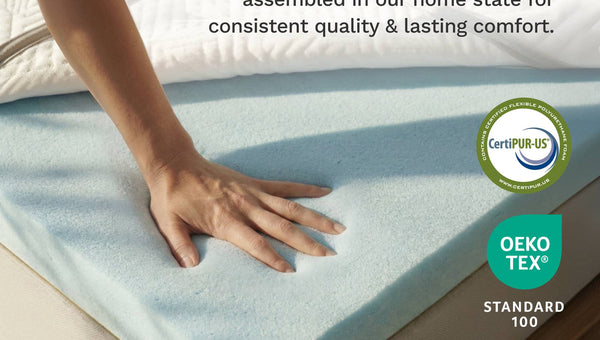
The Edge Signature also has reinforced perimeter construction for steadier edges, gel-infused foam with a breathable knit cover, and CertiPUR-US certified foams, and it is made in North Carolina. It comes with 120 nights to decide and a 10-year warranty. If Medium-Firm turns out to be wrong for you during the trial, we will send the Plush layer instead of taking the mattress back. It is available in twin XL, queen and king, from $1,095.

Things you can try tonight
- Put a pillow under your knees. This tilts the pelvis slightly and takes strain off the lower back for many back sleepers.
- Check your pillow height. A pillow that pushes your head too far forward changes your whole spine line. Our Signature Adjustable Pillow lets you remove foam layers to get the height right.
- Add a topper only if the base is still supportive. A topper can soften a mattress that is too firm, but it cannot fix one that sags. See which mattress topper to choose for back pain and our toppers for pain relief.
- Give a new mattress time. Some stiffness in the first couple of weeks is common while your body adjusts. More in new mattress, new back pain?
- Look beyond the bed. Gentle movement, stretching and a consistent routine all help. Here are 6 tips for better sleep with back pain.
Viscosoft's insight
A mattress can make sleep more comfortable, but it is not a treatment. If your back pain lasts all day, is sharp, or comes with numbness or tingling, talk to a doctor or physical therapist.
FAQ
Is a hybrid mattress good for back sleepers with lower back pain?
Often, yes. Pocketed coils help keep the hips from sinking while foam on top contours to the lower back. Look for a medium-firm feel and a firm transition layer. For ongoing pain, check with a doctor.
Should a back sleeper get a firm or medium-firm mattress?
Medium-firm is the best starting point for most back sleepers. A very firm mattress can leave a gap under the lower back, especially for lighter people.
Can a mattress cause lower back pain?
A mattress that is too soft, too firm or worn out can contribute to morning stiffness by letting your spine fall out of a neutral line. It is rarely the only factor, so persistent pain is worth raising with a medical professional.
How do I know if my mattress is too soft for my back?
Common signs are visible body impressions, a feeling of sleeping in a hole, hips sinking lower than your shoulders, and stiffness that eases once you are up and moving.
Do I need a new mattress, or just a new comfort layer?
If the base is still flat and supportive and only the top feels worn, replacing the comfort layer can restore the feel. On a modular mattress like the Edge Signature, you can replace just that layer.
The bottom line
For most back sleepers with lower back pain, start with a medium-firm mattress that keeps the hips level, and consider a hybrid if you want responsive support and easier movement. When the mattress eventually softens, it is usually the top layer that has gone. Our modular mattresses let you replace that layer, or switch the feel, without buying a whole new bed.