If you wake up with a sore back most mornings and your body feels older than it is, it is easy to assume this is just what getting older feels like. Before you accept that, look at what you are sleeping on. An old mattress is one of the most common causes of morning back pain, and one of the few you can fix in an afternoon.
This guide explains how a worn mattress causes back pain and how to tell whether your bed is the problem. It also covers what firmness helps a bad back, and when to replace the mattress rather than patch it.
Summary
- A mattress causes back pain when it stops holding your spine level. Pain that is worst on waking and eases once you move is the classic sign.
- Medium-firm beats firm for most people with back pain. A trial of 313 patients published in The Lancet found medium-firm mattresses reduced pain and disability more than firm ones.
- Most mattresses last 7 to 10 years, and the comfort layer goes first. A mattress with a replaceable comfort layer lets you fix the worn part without buying a new bed.
Can a mattress cause back pain?
Yes. A mattress has two jobs: keep your spine in a straight, neutral line, and take the pressure off the points that carry your weight, mainly the hips and shoulders. As a mattress ages, it loses both abilities. Notice we said "it" and not "you". Springs lose their push, foam loses its shape, and the places where you lie every night sink lower than the rest of the bed.
Once that happens, your spine spends the night slightly bent, your lower back muscles work overtime to hold you level, and you wake up stiff. The pain is real, but it is not coming from your back. It is coming from the eight hours your back spent compensating for a surface that stopped doing its job.
Viscosoft's insight
Back pain that is worst on waking and eases once you move often points to the mattress. Pain that stays with you all day, gets worse when you sit, or keeps waking you at night can have other causes and is worth a conversation with a doctor.
How to tell if your mattress is causing your back pain
You cannot send a mattress for an X-ray, but the pattern of the pain tells you most of what you need to know. Run through these questions:
- When does it hurt? If your back hurts on the mattress first thing in the morning but loosens up once you move around, the bed is the likely cause. Pain that builds through the day points elsewhere.
- Where does it hurt? Lower back pain in bed usually means your hips are sinking into a soft spot and your spine is sagging in the middle. Upper back and shoulder pain is more often a pillow problem, or a mattress too firm to let your shoulders settle if you sleep on your side.
- Do you sleep better elsewhere? If you wake up fine in a hotel or at a friend's house, the difference is the mattress.
- Can you see the problem? Strip the bed and look along the surface. Body-shaped dips, a visible slope toward the middle, or a ridge between two sleepers all mean the comfort layer has given up.
- How old is it? Past seven years, assume the mattress has changed even if it still looks fine.
If the mattress is new rather than old and your back hurts anyway, that is a different problem with a different fix. Our guide to back pain after a new mattress covers the adjustment period and what to do if it does not pass.
Symptom, likely cause and fix
| What you notice | What it usually means | What fixes it |
|---|---|---|
| Lower back aches on waking, eases within an hour | Mattress has softened under the hips, spine sags | New mattress, or a new comfort layer on a modular one |
| Hips and shoulders feel pressed, you toss and turn | Mattress too firm for your position or weight | Plush topper if the mattress is still supportive, or a plush comfort layer |
| You roll toward the middle or toward your partner | Sagging mattress or frame without center support | Check the base first, then replace the mattress if it still sags |
| Neck and upper back pain, lower back fine | Pillow height wrong for your sleep position | Change the pillow before the mattress |
| Pain all day, worse sitting | Probably not the mattress | See a doctor or physical therapist |
Is a firm mattress better for a bad back?
Usually not, and this is the most common mistake people with back pain make. Anyone weighing up a firm or soft mattress for back pain has heard the old advice that a bad back needs a hard bed. So people with a firm mattress and back ache often assume they need something even harder. The evidence says otherwise. A randomized trial of 313 people with chronic low back pain, published in The Lancet, compared the two. After 90 days, those on medium-firm mattresses had less pain lying in bed, less pain getting up and less disability than those on firm mattresses.
The reason is simple. A very firm surface does not let your hips and shoulders sink in at all, so your spine bows instead of lying straight, and the pressure points you wanted to relieve get worse. A very soft surface has the opposite problem: your hips sink too far and your lower back arches. Soft mattress back pain and extra-firm mattress back pain are the same problem from opposite directions.
Medium-firm is the sensible starting point for most people, with one caveat: "medium-firm" means something different to every brand and every body. A medium-firm that suits a 140-pound side sleeper will feel soft to a 240-pound back sleeper. That is why the ability to change the firmness after you have slept on it is worth more than getting the label right in the showroom. Our Edge mattresses are built around that: you choose plush or medium-firm, and if your back disagrees with your choice, you swap the comfort layer instead of the mattress.
Let your sleeping position guide the firmness
How you sleep decides where your weight lands and how much the mattress needs to give. It also explains why two people with the same back pain can need different beds.

Firmness by sleeping position
- Side sleepers put all their weight through one shoulder and one hip, so they need enough give for those points to sink in while the waist stays supported. Medium-soft to medium usually works best.
- Back sleepers need the lower back supported without the hips dropping. Medium-firm is the usual sweet spot, and it matches what the Lancet trial found for back pain.
- Stomach sleepers need the firmest surface of the three, because any sinking at the hips arches the lower back all night. Medium-firm to firm, with a thin pillow or none.
- Combination sleepers who change position should lean medium-firm, which handles all three positions acceptably rather than one perfectly.
Whatever your position, the test is the same. Lie on it for ten minutes and ask whether your spine feels straight. If you are arching, the bed is too soft for you. If you are lying on your shoulder rather than in the mattress, it is too firm.
Memory foam mattress back pain: when the foam is the problem
Memory foam gets blamed for back pain more than it deserves, and praised more than it deserves too. Fresh, high-density memory foam is one of the better materials for pressure relief, because it spreads your weight across the whole contact area instead of pushing back at the hips and shoulders. Problems start when the foam is too soft for your weight, or when it is simply old.
Old memory foam does not break the way springs do. It softens, and it stops recovering its shape. The spot where your hips land every night ends up an inch lower than the rest of the surface, and your spine follows it. The result is memory foam mattress back ache that no amount of rotating will fix. Low-density foam gets there fastest, which is why cheap memory foam mattresses often feel wonderful for a year and wrong after three.
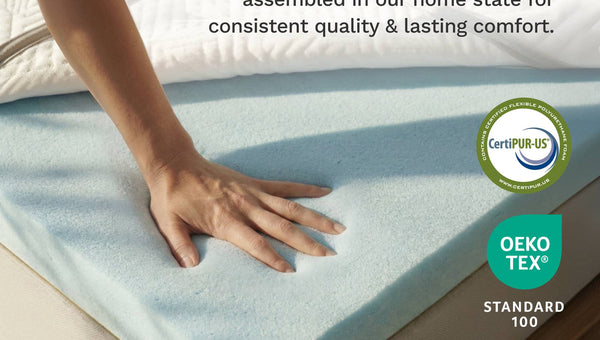
What most people do not realize is that on nearly every mattress, the foam that has softened is only the top two to four inches. The support layers underneath are usually fine. On a conventional mattress there is no way to get at that top layer, so the whole bed gets replaced. On a modular mattress like the Edge, the 3-inch comfort layer unzips and lifts out, and a replacement comfort layer brings the surface back to level for much less than a new mattress.
How often should you replace a mattress?
Every 7 to 10 years is the usual guidance, and the Sleep Foundation puts most mattresses in that range. By type, it gives foam 6 to 7 years, hybrids 6.5 to 7.5 and innerspring beds 5.5 to 6.5. Plenty of people need a new one sooner. Body weight, two sleepers instead of one, a weak frame and how well the mattress has been looked after all shorten its life.
The calendar is less useful than the mattress itself, and when to replace a mattress comes down to how it behaves. These are the signs you need a new mattress, whatever its age:
- You wake up with aches that fade once you are up and moving.
- You sleep better in hotels or in your guest room than in your own bed.
- There are visible dips, body impressions or a slope toward the middle.
- You or your partner toss and turn, or you feel each other move more than you used to.
- The mattress creaks, feels lumpy, or has a spring you can feel through the surface.
If two or more of those apply, the question is no longer whether to replace the mattress but what to replace it with. If only one applies and the mattress is otherwise supportive, a topper may be enough for now.
Can a topper save an old mattress?
Sometimes, and it is worth knowing when, because a topper costs a fraction of a mattress. A topper changes the surface of the bed. It cannot change what is underneath. So the rule is: if the mattress is still flat and supportive but feels too hard, too thin or worn on top, a topper fixes that. If the mattress has sagged, dipped or developed a hump down the middle, a topper just lies on top of the sag. Within a few weeks it takes the same shape, and you are back where you started.
The quickest check is the floor test. Put the mattress on the floor for a night. If your back feels better, the frame was part of the problem. If it feels the same and you can still see a dip, the mattress is done. Our guide on choosing between a topper and a new mattress goes through this decision in more detail.
For a mattress that passes the test but feels too hard or lacks surface support, a dense 3-inch memory foam topper adds the pressure relief the mattress has lost without letting your hips sink.
What to look for in a mattress for a bad back
If the old mattress has failed the tests above, here is what matters in the next one, in order.
- Support first, then softness: The base of the mattress has to hold your hips level. The comfort layer on top handles pressure relief. A good mattress for a bad back does both, which usually means a dense support core with 3 to 4 inches of pressure-relieving foam over it.
- Medium-firm as the default: Move softer if you are a lighter side sleeper, firmer if you are heavier or sleep on your stomach.
- Hybrid or all-foam: Pocketed coils give a firmer, more even support base and better edge support, which helps if you sit on the side of the bed to get up. All-foam absorbs more movement and contours more closely. Our guide to memory foam and hybrid construction compares them for back pain specifically.
- A trial long enough to matter: A sore back takes two to four weeks to adjust to any new surface, so a 30-night trial is barely enough. Look for 100 nights or more.
- A way to change your mind: This is the one most mattresses fail. Once you have slept on it for a month, you will know whether the firmness is right, and on most beds there is nothing you can do about it.
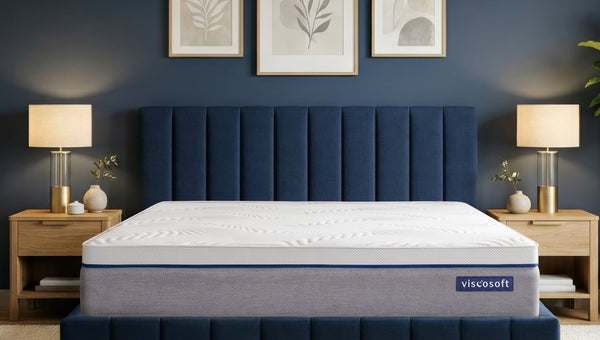
The Edge Signature was designed with that list in mind. It is a 14-inch mattress with a 3.5-inch comfort layer in plush or medium-firm, over your choice of a hybrid base with pocketed coils or an all-foam base. It is made in North Carolina from CertiPUR-US certified foams. It comes with 120 nights to decide and a 10-year warranty, and when the comfort layer eventually wears, you replace the layer and keep the base. It is available in twin XL, queen and king.
The frame matters more than you think
A good mattress on a bad frame behaves like a bad mattress. Slats spaced too far apart let foam sag between them. A queen or king frame without a center support rail dips in the middle. An old box spring with tired springs flexes under a foam mattress that was built for a rigid base. Each of those puts a curve back into a spine the mattress was supposed to keep straight.
Before you blame the mattress, look underneath it. If the slats are more than about 3 inches apart, if the center of the frame has no legs to the floor, or if the box spring is older than the mattress, fix that first. Our guide to the best foundation for a memory foam mattress covers what works under a foam or hybrid bed and what does not.
FAQ
Can a bad mattress cause back pain?
Yes. A worn or unsupportive mattress lets your hips sink lower than the rest of your body, so your spine spends the night curved and your lower back muscles work to compensate. The result is stiffness and pain that is worst when you get up and eases within an hour of moving. Pain that lasts all day or gets worse when you sit usually has a different cause.
How do I know if my mattress is too soft or too firm?
Lie on your back and slide a hand under the small of your back. If it slips in easily with a gap above it, the mattress is too firm and your hips are not sinking in. If you cannot get your hand in at all, the mattress is too soft and your hips have dropped. On your side, your spine should look straight from the back; a shoulder that is propped up rather than sunk in means too firm.
Is a firm mattress good for back pain?
Not for most people. The best available evidence, a randomized trial of 313 chronic low back pain patients published in The Lancet, found that medium-firm mattresses reduced pain and disability more than firm ones over 90 days. A very firm mattress stops the hips and shoulders from sinking in, which bows the spine instead of supporting it. Medium-firm is the better starting point, adjusted for your weight and sleep position.
How often should you replace a mattress?
Every 7 to 10 years for most mattresses, according to the Sleep Foundation, with foam and innerspring beds at the shorter end and latex at the longer end. Heavier sleepers, couples and weak frames shorten that. Judge by the mattress rather than the calendar: sagging, body impressions, waking up sore and sleeping better away from home all mean it is time, whatever the age.
Why does my lower back hurt in bed but not during the day?
Because your mattress is holding your spine in a position your back cannot hold comfortably for eight hours. During the day you move and your muscles share the load. In bed, if your hips sink into a soft or worn spot, your lower back arches and stays arched all night. Pain that fades once you are up is a strong sign that the bed, not your back, is the problem.
Can a mattress topper fix back pain from an old mattress?
Only if the mattress is still flat and supportive underneath. A topper adds pressure relief to a mattress that is too firm or worn on the surface, and that is enough for many people. It cannot fix a sag, a dip or a hump, because it lies on top of the problem and takes its shape within weeks. If you can see a dip when the bed is stripped, the mattress needs replacing, not topping.
Does a memory foam mattress cause back pain?
Not when it is the right density and in good condition. Memory foam relieves pressure better than most materials, which is why it is common in mattresses for back pain. Problems come from foam that is too soft for your weight, so your hips sink too far, or from foam that has aged and lost its shape. On a mattress with a replaceable comfort layer, the aged foam can be swapped out without replacing the bed.
Which is better for a bad back, a hybrid or a memory foam mattress?
Both can work, and the base matters less than the firmness being right for you. A hybrid with pocketed coils gives firmer, more even support and holds its edges better, which suits heavier sleepers and anyone who needs a firmer feel. All-foam contours more closely and absorbs movement, which suits lighter side sleepers and couples. Whichever you choose, aim for medium-firm and a trial long enough to be sure.
Final takeaway
If your back hurts when you wake up and improves once you move, your mattress is the most likely cause. That goes double if it is more than seven years old or you can see where you sleep in it. Firmer is not the answer. Medium-firm support with enough give at the hips and shoulders is what the research backs, matched to your sleep position and weight.
A topper can rescue a mattress that is still supportive but too hard on top. A mattress that has sagged needs replacing, and when you replace it, choose one where the firmness is not a permanent decision. Our modular mattresses let you swap the comfort layer when your back disagrees with your first choice, or when the top wears out years from now. Either way, you are not shopping for another mattress in a few years.