A memory foam mattress needs a flat, steady base. Without the right support underneath, the foam can dip, wear unevenly, or feel less comfortable than it should. That is why choosing the right foundation matters before you set up the bed.
If you are shopping for a bed foundation for memory foam mattress support, the safest choice is usually a firm, even surface that supports the mattress from edge to edge. Platform beds, close-spaced slats, bunkie boards, and compatible adjustable bases can all work well when they meet the mattress brand’s setup requirements.
This guide explains what to look for, which foundation types work best, and how to avoid common setup mistakes that can shorten the life of your mattress.
Why a memory foam mattress foundation matters
Memory foam responds to pressure. That is what gives it a contouring feel when you lie down. But the foam still needs stable support underneath. If the base has wide gaps, weak boards, or uneven sections, the mattress may sag into those spaces over time.
A good mattress foundation for memory foam helps the mattress stay level. It also helps the bed feel more consistent across the surface, especially around heavier pressure areas like the hips, shoulders, and lower back.
The best foundation for memory foam mattress support is not always the most expensive option. It is the one that keeps the mattress flat, stable, and compatible with the care instructions.
Viscosoft's insight
Memory foam does not need a springy base. It needs steady, even support. Start with the mattress care instructions, then choose a foundation that keeps the full surface level.
What is the best foundation for a memory foam mattress?
If you are asking what is the best foundation for a memory foam mattress, the answer is a flat, supportive base with no major gaps. For most people, that means a solid platform bed, a close-spaced slatted base, or a bunkie board placed over an existing frame.
The best bed foundation for memory foam mattress setups usually share the same basic traits. They support the full mattress, do not flex too much under weight, and keep the foam from sinking between open spaces.
For queen, king, and California king sizes, center support also matters. A large mattress needs support through the middle, not just around the outside edge of the frame.
Memory foam mattress foundation comparison
Different foundations can work, but they do not all solve the same problem. Use this table to compare the most common options.
| Foundation type | Best use | What to check | Best for memory foam? |
|---|---|---|---|
| Platform bed | Simple, stable support without a box spring | Surface strength, center support, and mattress size fit | Yes, when the surface is flat and strong |
| Slatted base | Support with more airflow under the mattress | Slat spacing, slat width, and frame strength | Yes, if the slats are close enough together |
| Bunkie board or solid board | Adding flat support to an existing frame | Correct sizing, smooth edges, and stable placement | Yes, when it creates an even surface |
| Box spring | Raising bed height when the box spring is compatible | No sagging, weak coils, or uneven spots | Sometimes, but only if it is firm and even |
| Adjustable base | Changing sleep or lounge position | Mattress approval for adjustable bases | Yes, if the mattress is compatible |
| Floor | Temporary low-profile support | Moisture, airflow, cleanliness, and warranty rules | Can work short term, but not ideal for every room |
Platform beds
A platform bed is one of the easiest ways to support memory foam. It gives the mattress a stable surface without needing a box spring. Many platform beds use a solid surface, while others use closely spaced slats.
A platform bed can be a mattress foundation ideal for memory foam when it stays flat under weight and supports the full mattress size. It also creates a clean, lower-profile look, which works well in many bedrooms.
Before choosing one, check the weight capacity and center support. A base that looks sturdy but bends under pressure may cause the mattress to feel uneven over time.
Viscosoft's insight
A platform bed is only as supportive as the surface under the mattress. Look for a base that stays flat, stable, and strong across the full bed.
Slatted bases
A slatted base can work well as a foundation for memory foam mattress use when the slats are close enough together. The goal is to support the foam evenly so it does not dip into wide gaps.
Slat spacing is the detail to watch. If the slats are too far apart, the mattress may not be supported evenly. That can affect comfort and may also conflict with the mattress warranty.
Slatted bases have one useful advantage: airflow. Because air can move under the mattress, this setup can be helpful in warmer or more humid rooms. Just make sure the slats are strong, level, and properly secured.
Solid boards and bunkie boards
A bunkie board or solid board can improve an older frame that does not give enough support on its own. It creates a flatter layer between the mattress and the frame.
A solid foundation for memory foam mattress support should be smooth, level, and correctly sized. If you use plywood or a board, it should not hang over the frame or leave parts of the mattress unsupported.
This option can be useful when the bed frame has wide slats or when a traditional box spring is no longer firm enough. It is also a simple way to add support without changing the full bed frame.
Can you use a box spring with memory foam?
A box spring is not always the best match for memory foam. Traditional box springs were made for innerspring mattresses, and some are too flexible or uneven for foam beds.
If your box spring is firm, flat, and in good condition, it may work. If it sags, creaks, bends, or has weak coils, it can make a memory foam mattress feel worse. It may also allow uneven wear.
A box spring can still be useful if you want a taller bed, but it should not be used just because it is already there. Check your mattress care instructions before placing memory foam on an older box spring.
Adjustable bases
Many memory foam mattresses can work on adjustable bases because foam can bend more easily than some traditional mattress builds. This can be useful if you like reading, watching TV, or resting with your upper body elevated.
Compatibility still matters. Some mattresses are too thick, too stiff, or not approved for adjustable bases. Always check the mattress instructions before using one.
If you share a bed and want different positions on each side, a split setup may also be worth considering. It allows each sleeper to adjust their side without changing the full bed position.
Can you put a memory foam mattress on the floor?
The floor is flat and firm, so it can support a memory foam mattress. Still, it is not always the best long-term choice. The main concerns are airflow, moisture, dust, and warranty rules.
If you place the mattress on the floor, keep the area clean and dry. Lift the mattress regularly so air can move around it, especially in humid rooms. If the mattress brand does not allow floor use, choose a raised foundation instead.
For daily sleep, a platform bed, close-spaced slatted base, or compatible foundation usually makes the bed easier to care for and easier to use.
How to choose the right foundation
If you are asking what foundation is best for memory foam mattress comfort, start with support. Style and bed height matter, but the base must first keep the mattress level.
Think about how high you want the bed to sit, whether you need under-bed airflow, and whether your current frame already has enough support. A lower platform can make the room feel more open. A taller setup can make getting in and out of bed easier.
The right foundation should also match your mattress size. Larger beds need strong middle support. Without it, the center of the mattress may feel less stable over time.
When the foundation is not the problem
Sometimes the base is fine, but the mattress still does not feel right. If the foundation is flat and supportive but the bed feels too firm, too soft, or too warm, the issue may be the comfort layer on top.
A topper changes the surface feel of the mattress. A foundation supports the mattress from below. They solve different problems.
If your mattress feels too soft or lacks surface support, the Select High Density mattress topper is one option to compare. If your mattress feels too warm, the Active Cooling Copper topper is a cooling-focused option.
Viscosoft's insight
A foundation supports the mattress from below. A topper changes how the mattress feels on top. If the base is stable but the bed still feels wrong, the comfort layer may be what needs attention.
Protect the mattress and foundation setup
A strong foundation helps the mattress keep its shape, but the sleep surface still needs protection. Spills, sweat, and daily moisture can affect foam over time.
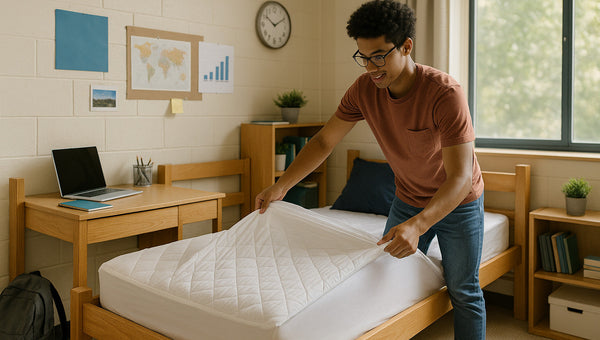
A washable mattress protector adds a barrier between you and the mattress. It can help keep the bed easier to care for without changing the feel of the foundation underneath.
The Active Dry mattress protector is designed to add a protective layer over the mattress or topper. You can also compare all ViscoSoft mattress protectors.
Buying a new memory foam mattress?
If your mattress has deep sagging, broken support, or a shape that no longer recovers, a new foundation alone will not solve the problem. The base can support the mattress, but it cannot rebuild worn-out foam.
When replacing a mattress, choose the mattress and foundation together. The mattress should match the support surface, and the support surface should match the care instructions.
For a new bed setup, you can review the React Mattress. If you are still deciding between a mattress and a topper, read our guide on mattress toppers and mattress pads or explore the ViscoSoft mattress toppers collection.
Final takeaway
The best foundations for memory foam mattresses are flat, firm, and supportive. Platform beds, close-spaced slatted bases, bunkie boards, compatible adjustable bases, and firm flat surfaces can all work when they support the mattress evenly.
The main thing to avoid is uneven support. Wide slat gaps, weak boards, old box springs, and sagging frames can all make a good mattress feel worse than it should.
To choose the right bed foundation for memory foam mattress support, start with the mattress instructions. Then choose a base that keeps the mattress level, fits your preferred bed height, and supports the full surface. To complete the setup, compare ViscoSoft mattress toppers and mattress protectors.